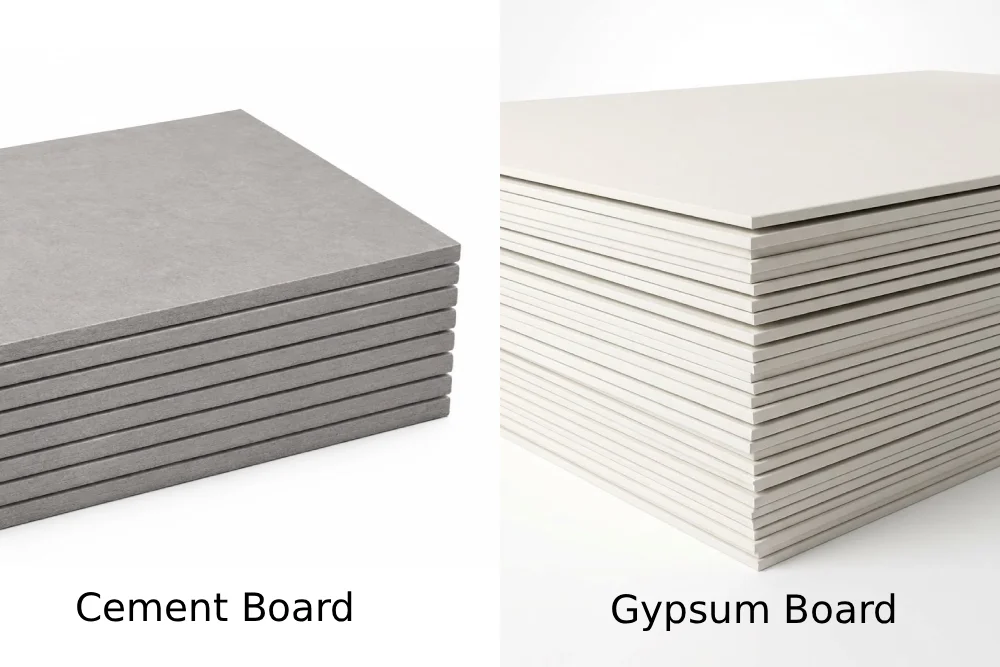
Did you know that humidity in the UAE can be as high as 80% during summer? Choosing appropriate materials for the walls is of utmost importance. Choosing between cement board vs drywall determines the total lifespan of your structure.
The key distinction between drywall and cement board is in their moisture resistance and core strength. Selecting the right panel prevents damage to the structure and saves on repairs.
What is a Cement Board?
A cement board is a tough sheet made from Portland cement and fiberglass mesh. It provides a strong base built to withstand heavy impacts and wet environments.
Core Features of Cement Boards
Resistant to Water: It won’t corrode or get damaged when kept in still water.
Impact Resistance: Due to its high density, it resists impact and friction in congested places.
Fire Resistance: The non-flammable substance gives high fire resistance.
Backer Base for Tiles: This ensures that the heaviest ceramic or porcelain tiles can be securely attached to walls.
Contact a trusted cement board supplier in uae to get certified panels that meet local safety standards.
What is Drywall?
Drywall is made up of gypsum core covered by thick paper. It is widely used around the globe in constructing interior walls, false ceiling, and partition walls.
Core Features of Drywall
- Fast Fitting: Light sheets make cutting and hanging simple for installation teams.
- Smooth Finish: Paints and wallpapers are easy to apply on the paper without any difficulties.
- Economical: Reduced panel prices allow project managers to have economical construction budgets.
- Water Treated Panels: Green boards are ideal for use in moderately wet rooms.
For kitchens or laundry rooms, choose an MR gypsum board to stop sagging without buying heavy concrete panels.
Difference Between Drywall and Cement Board Explained
Knowing the difference between drywall and cement board helps you pick the right board for your site.
Core Material Mix
Drywall uses soft gypsum rock mixed with paper backings for easy cutting. Cement board uses crushed stone and fiberglass, creating a hard panel for tough jobs.
Moisture and Mold Defense
Standard drywall breaks down when wet, causing core decay and mold growth. Cement board has no organic parts, so it never rots or swells under water.
Panel Weight and Support
Cement board is heavy and needs strong frame studs along with zinc-coated drywall screws for support. Drywall is light, putting far less strain on wall frames.
Speed of Fitting
Workers score drywall quickly with a utility knife. Cement board needs carbide blades for cutting and alkali mesh tape for smooth joint sealing.
Comparing Key Features: Cement Board vs. Drywall
Evaluating cement board vs drywall side by side clarifies where each panel performs best:
| Feature | Cement Board | Drywall / Gypsum Board |
| Main Core Material | Cement & fiberglass mesh | Gypsum plaster with paper layers |
| Water Resistance | Complete protection | Low (Better with MR boards) |
| Main Use | Exterior walls, tile backer, wet zones | Interior walls, ceilings, partition layouts |
| Impact Strength | High resistance | Medium resistance |
| Work Needed | Higher (Needs power cutting tools) | Fast and simple |
| Wall Surface | Rough face (Ideal for tile glue) | Smooth face (Ideal for paint) |
Key Needs for UAE Building Sites
Local weather patterns and safety codes in the UAE set strict demands for building walls.
1. High Relative Humidity
Coastal regions face extreme moisture levels for months every year. Exterior walls and open balconies need panels that refuse to trap air moisture.
2. Air Conditioning Units
Heavy cooling creates steep temperature differences between indoor rooms and outdoor heat. Moisture builds inside wall frames, making waterproof backer boards vital.
3. Local Fire Codes
UAE safety laws demand non-combustible building panels for high-rise projects. Cement boards easily pass tough safety fire checks.
4. Fast Work Schedules
Construction deadlines in Dubai call for fast installations. Lightweight indoor drywall systems speed up room layouts without delays.
Best Uses in Construction Projects
Matching panels to the right rooms stops structural issues and avoids expensive fix-up work later.
WHERE TO USE EACH BOARD TYPE
| WET & EXTERIOR ZONES
(Use Cement Board) |
DRY INTERIOR ZONES
(Use Drywall) |
| * Shower Stalls & Sauna Rooms
* Exterior Facades & Cladding * Swimming Pool Surroundings * Commercial Kitchen Backsplashes |
* Living Rooms & Bedrooms
* Office Partition Walls
* Interior Hallways |
Where to Fit Cement Board
- Wet spots like public showers, steam rooms, and pool areas.
- Outside wall cladding, roof edges, and exterior facades exposed to rain or sun.
- Base layers behind heavy floor and wall tiles.
- Kitchen walls in restaurants exposed to steam and daily washing.
Where to Fit Drywall
- Dry indoor areas like bedrooms, living rooms, and office spaces.
- Commercial office dividers and hanging drop ceilings.
- Interior perimeter walls that need quick paint or wall wraps.
- Moderate wet spots like house kitchens when using treated moisture boards.
Cost and Labor Factors
Project costs extend beyond initial material tags to cover fitting time, labor hours, and ongoing fixes.
Material Buying Costs
Standard gypsum drywall is cheap and easy to find, making it great for big indoor jobs. Cement boards cost more per sheet due to heavy production needs.
Fitting Work Efficiency
Drywall goes up fast. Workers can board and tape large rooms in a single shift. Cement board takes extra labor, heavy tools, and rigid frames.
Long-Term Value
Using standard drywall in wet shower stalls leads to wall failure and costly repairs. Choosing cement boards for wet rooms removes water damage risks completely.
Summary Guide: Cement Board vs Drywall Choice
Follow these clear guidelines when picking between cement board vs drywall for your upcoming build:
- Pick Cement Board for walls facing direct water streams, heavy tile weights, or harsh outdoor weather.
- Pick Drywall for cheap, smooth, and fast interior walls or drop ceiling designs in dry rooms.
- Combine both panel types across your floor plan to keep costs down while keeping walls strong.
Check your project moisture levels and load needs to choose the right materials. For top-quality panels across the region, partner with Intact Gypsum for reliable supplies on every build.
Frequently Asked Questions
1) Is cement board completely waterproof?
Yes, cement board does not absorb water or rot when wet. It retains full strength in wet shower setups.
2) What is the main difference between drywall and cement board?
The core difference between cement board vs drywall is the material mix; drywall uses gypsum while cement board uses concrete.
3) Can I fit drywall inside my bathroom?
Do not use standard drywall near water. Use moisture-resistant gypsum for dry bathroom areas and cement board inside showers.
4) Can I paint over a cement board?
Cement board has a rough texture made for holding tile glue. Apply a thin skim coat first if you plan to paint it.
5) Which panel stops sound better inside walls?
Cement board is heavy and blocks sound well. However, layered drywall with insulation batts offers a lighter, cheaper soundproof option.